
"Colombia varietal"
80 article(s) found

Flavor characteristics, producing areas and cooking parameters of single bean in Diamond Hill Manor, Costa Rica
For the exchange of professional baristas, please pay attention to the coffee workshop (Wechat official account cafe_style) Costa Rica Diamond Hill Manor single bean flavor characteristics, producing areas and brewing parameters Costa Rican coffee was first exported in 1779 when it was introduced from Cuba in 1820. There are about 32000 coffee farmers, with an average planting area of less than one hectare (1).

Grading, price, raw bean and baking curve of single bean at Diamond Hill Manor in Costa Rica
The exchange of professional baristas please follow the coffee workshop (Wechat official account cafe_style) Costa Rica Diamond Hill Manor single bean classification, price, raw beans and baking curve Costa Rica Costa Rican population: 4586000 in the past, Costa Rica has successfully sold its coffee according to the name of the region where it is produced. However, tastes vary from region to region, so this is not true.

The reason why Italian coffee beans are blended Italian coffee why Italian coffee should be blended
Professional coffee knowledge exchange More coffee bean information Please pay attention to the coffee workshop (Weixin Official Accounts cafe_style) Generally speaking, the blending goal of espresso coffee is different from that of filtered coffee (some people may say that some blends are specially brewed for French presses or used with cream/milk). Filtered coffee may be for complexity or balance
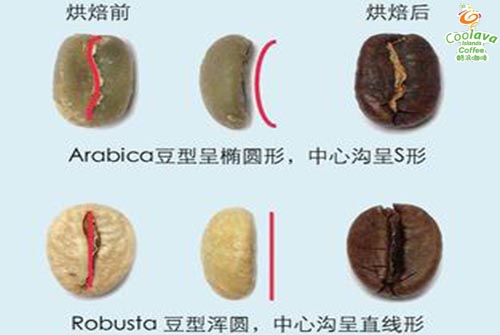
Boutique coffee beans: details of Arabica and the difference between Arabica and Robusta
Arabica Coffee Coffee Arabica many people have seen roasted coffee beans, but unless you have lived or traveled to coffee producing areas, you may not know coffee trees. The saplings are short-trimmed, but when they mature, they are 30 feet tall and covered with waxy leaves that grow symmetrically in dark green. The coffee fruit grows along the branches. After the white flowers are in full bloom and pollinated, the fruit takes a year to ripen.

Sulawesi Coffee Bean treatment method introduction to Red Wine Solar Water Honey treatment
Sulawesi Coffee Bean treatment method Red Wine Sun Water Honey treatment introduction Sulawesi land mass extrusion, so the average height of the island is about 500 meters above sea level. Sulawesi is located in the east of Indonesia, divided into North Sulawesi and South Sulawesi.
Selection of basic Coffee Tree Classification
Arabica Coffee and Variety improvement. What do the so-called families, genera and species of Arabica species mean in biological classification? In terms of biological classification, it is divided into boundary, phylum, class, order, family, genus and species from top to bottom, and the lower part of the species is subdivided into subspecies, varieties and varieties. Arabica coffee is generally thought to originate from the Ethiopian plateau and is widely divided.

Colombian Coffee introduction to the Colombian Palm Tree and Big Bird Manor Coffee Project
Professional Coffee knowledge Exchange more information on coffee beans Please follow the Coffee Workshop (official Wechat account cafe_style), honey-treated raw coffee beans from Colombian coffee farmer Ricardo Torres (Ricardo Torres), a collaboration with the Palm Tree and Big Bird Manor's community crop program. After picking and screening the coffee cherries, rest for a few hours to prepare.

Basic knowledge of boutique coffee major coffee bean producing areas in the world
Coffee comes from coffee beans, which are harvested and processed from the fruit of trees. Coffee trees grow at the center of the equator, between latitudes of 25 degrees south and north, and are called coffee belts in tropical or subtropical countries. at present, coffee is produced in more than 60 countries. Coffee is produced in South America, Central America, the West Indies, Asia, Africa, Arabia, the South Pacific and
The world's major coffee producing areas introduce the basic knowledge of fine coffee coffee beans represented by all continents
Coffee comes from coffee beans, which are harvested and processed from the fruit of trees. Coffee trees grow at the center of the equator, between latitudes of 25 degrees south and north, and are called the homes of tropical or subtropical countries called coffee belts. At present, there are about 60 coffee-producing countries. Coffee is produced in South America, Central America, the West Indies, Asia, Africa, Arabia, the South Pacific and
Coffee Language
We will explain a few adjectives or nouns. The reminder is that these words are neutral and do not carry value judgments.

Introduction of Lactic Acid Sun-treated Coffee in Colombian Palm and Big Bird Manor
Colombia LA PALMAEL TUCAN Columbia Palm and Big Bird Manor country: Columbia production area: Whelan Manor: Palm trees and Big Bird Manor treatment: lactic acid sun altitude: 1650 m breed: Kaduai Palm and Big Bird Manor LA PALMAEL TUCAN Palm Tree and Big Bird Manor was founded in 2011 by crazy science.
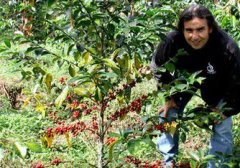
Comparison of three major coffee farms in Colombia: coffee varieties. Shading trees and fermentation treatment
Professional barista communication please follow the coffee workshop (Wechat official account cafe_style) this time is about three Colombian coffee farms, the first La Palma y El Tcan is attracted by their fermentation methods, the other Finca Santuario is because the author recently bought their love elixir, so want to know more, the third is Finca Santuario

Sulawesi coffee bean processing methods, taste characteristics, quality manor introduction
Mzuzu is the provincial capital of northern Malawi and the third most populous city in Malawi. Almost the whole country of Malawi is high in the mountains, so there is a significant vertical difference in climate in most areas, which is the highland climate in the tropical dry and wet season. Generally speaking, the temperature in the alpine plain is very mild.

Planting history of single bean flavor description in Diamond Mountain, Costa Rica
For professional baristas, please follow the coffee workshop (Wechat official account cafe_style) ORIGIN: Costa Rica REGION: Tarrazu SUBREGION: Dota Valley PRODUCER: Montanas Del Diamante Estate/Gutierrez Family PLANT SPECIES: Arabica PROCESSING METHOD: Washed PROCESSING DESCRIPTION:

Historical Flavor description of Coffee Bean production in Costa Rica
The exchange of professional baristas please pay attention to the coffee workshop (Wechat official account cafe_style) Costa Rican coffee was first exported in 1779 when it was introduced from Cuba in 1820. There are now about 32000 coffee farmers, with an average planting area of less than one hectare (10000 tons). Costa Rica has a population of 41 billion (2006), coffee

Palm Tree and Bird Manor Panama CCD Project Arthuis Manor slow sunbathing characteristics of Kaduai
Professional coffee knowledge exchange more coffee bean information please follow Coffee Workshop (Wechat official account cafe_style) Colombian Palm and Big Bird Manor [Community crop Program] St. Rosa Manor Rosa Farmer anaerobic controlled lactic acid fermentation sun drying treatment people believe that coffee was introduced to Colombia by Reverend Jeusuit in the 18th century, but it was not exported until the 19th century.

Introduction of planting varieties of single product beans in Costa Rica
The exchange of professional baristas please pay attention to the coffee workshop (Wechat official account cafe_style) Costa Rican coffee was first exported in 1779 when it was introduced from Cuba in 1820. There are now about 32000 coffee farmers, with an average planting area of less than one hectare (10000 tons). Costa Rica has a population of 41 billion (2006), coffee

Information and Flavor description of Coffee Bean Baking area in Costa Rica
Professional barista communication please pay attention to the coffee workshop (Wechat official account cafe_style) some coffee beans are emerald green after roasting, some coffee beans taste better after roasting, there are many skills in the baking process, the same baking degree but the curve of time and temperature is different, the taste is also slightly different, everyone's favorite flavor is not necessarily, you can try different roasting

Costa Rica Diamond Mountain Single Bean Flavor Description Variety Development History Treatment Baking Introduction
Costa Rica coffee cultivation was introduced from Cuba in 1779 and first exported in 1820. There are about 32,000 coffee farmers in Costa Rica, with an average cultivation area of less than one hectare (10,000㎡) per farmer. Costa Rica has a population of 4.1 million (2006), coffee cultivation area of 82,500 hectares and annual production of 1.7 million bags (60kgs per bag).

Costa Rican coffee bean roasting suggested flavor description of taste characteristics planting history
Professional barista communication please follow the coffee workshop (Wechat official account cafe_style) Costa Rica Tara Pearl Diamond Hill 1800 meters flavor description: soft orange tones, sugar cane sweet, toast, clean and bright taste, apricot kernels, cocoa taste is not necessarily everyone's preference, you can consider buying a small amount to try different roasting degrees. An explosion of beans, an explosion of beans, an explosion of beans.